🎧 Listen: Castos | 📺 Watch: full episode video
🎧 Listen to this episode
📺 Watch the interview
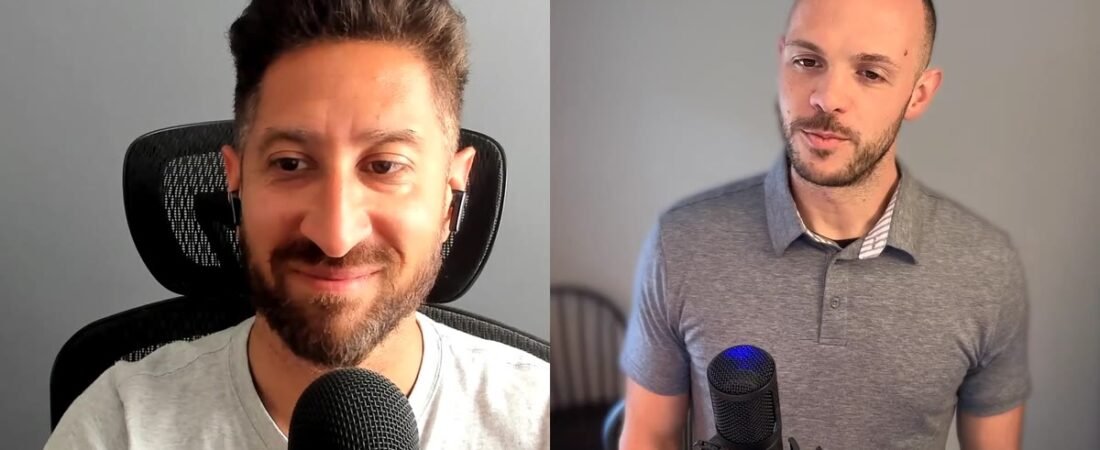
On this episode of the Unscripted Small Business Podcast, host Daniel Hill talks with Nick Garofalo of Openhanded Wealth. Nick lives in North Georgia, “kind of in the foothills of the mountains,” and at the time of recording he was in the second year of running his own fee-only financial planning firm, working with small business owners on both the personal and the business side of their money. Most of this conversation is about the part every new firm struggles with: getting people to trust you before they’ve ever paid you.
Financial planning, in five letters
Nick opened with the problem every advisor has at a cookout. Say you’re a doctor and people get it. Say you’re a financial planner and you get a polite nod.
“Financial planning is almost like saying, yeah, I’m an artist. It’s like, that’s cool. Yeah, great. Nobody knows what you do.”
So he boiled it down to a five-letter framework, RIITE: retirement (savings rate, spending and income needs), investments, insurance (mainly life and disability), taxes and estate. He doesn’t prepare taxes, but he reviews them and looks for strategies, “especially for my business owner clients.” He was also clear about how he gets paid: “I’m fee only, I’m agnostic to carrier, I don’t make commissions, I’m strictly paid by my clients.”
On estate planning, he pushed back on the idea that it’s only for older or wealthier people: “If you have a business, if you have a spouse, if you have kids, or if you have all three, you absolutely need to get your intent and your wishes down on paper.”
The 401(k) that started it all
Nick listened to Dave Ramsey at ten years old and has “always been a numbers guy.” Out of college he went to work for his dad, who had bootstrapped a business from nothing and finally got it making real money, and Nick ended up as “kind of his CFO, sort of finance person in the office.” Then came the tax bill. His dad “was clobbered with taxes in a few years.”
A friend who was a CFP asked whether they’d ever looked at a 401(k). With about ten employees, Nick’s first reaction was that 401(k)s were for big companies. They ran the proposal anyway, and it worked out for everyone involved: his parents, the employees and the business.
“It lit a light bulb for me of like, this is really cool.”
Daniel’s take was that this is exactly the kind of completely legal option owners miss, because they’re busy finding new clients and keeping customers happy instead of thinking about plan design. Nick later left that job and started his own firm for “people like my dad,” owners who are finding business success, maybe for the first time, and need to know what to do next.
Niche down, or go broad first?
Every business coach says to niche down. Nick agrees with the goal and questions the order. You can’t pick the narrow set of problems you’re great at solving until you’ve solved enough problems to know which ones they are.
“It’s kind of a cart versus horse question, right?”
His answer for now is to take a broader mix of clients. One was an attorney spreading a large case payout over a five-year payment plan who needed help with how that money was invested. Another was a service-business owner who felt strapped for cash even though the business made good money. Nick compared that one to a chiropractor treating neck pain that’s really coming from your back: you treat the symptom, then pull the financials and look at the whole picture, “cash in, cash out, cash in the bank, cash in assets,” before choosing a tool to get from A to B.
Give it away to earn trust
When Daniel asked about marketing, Nick warned him it was “a little spaghetti on the wall right now.” Year one of an advisory firm is hard enough that “there’s books written about it, there’s like support groups for it.” His approach is to play the long game (he gave a shout-out to a short-form finance podcast literally called The Long Game) and lead with free help.
“Because people have to know, like, and trust you to do business with you.”
His four main channels are podcasting, blogging, short-form video and local networking, in person or virtual. SEO and paid ads sit at the bottom of his list. If you’re a small firm weighing where your first marketing hours should go, that ranking is worth noticing. It’s the same instinct Kate Hendrickson described in marketing through conversations.
A warm handshake beats a thousand LinkedIn posts
Asked which channel has worked best, Nick didn’t hesitate. In person wins, and it’s also the most fun.
“A warm handshake is worth a thousand LinkedIn posts.”
He loves the gear side of video (he did photography for a while), but he’s honest that a polished Instagram piece is a lot of work: “The script, the hook, the body, the format, the captions.” Online content makes you look legitimate. Meeting someone, shaking their hand and getting to know them is what actually builds the relationship. Daniel added that a real person who knows their stuff will often fix a problem you didn’t know you had, which is exactly how Nick’s own story started. Brandon Barnum makes the same case from the referral side in building raving referral partnerships.
Short-form video: the platform finds your audience
Nick’s favorite online channel is short-form video, for one reason: it’s free, and the distribution is someone else’s problem. You don’t have to keyword-optimize, target a demographic, pick the right mailing list or meet the right person at an event.
“Short form video, it’s totally handled for you by Instagram, LinkedIn, TikTok, YouTube.”
Those platforms want people to keep scrolling, so if your video is educational, funny or informative, they’ll put it in front of the people most likely to watch. He posts the same video everywhere and only adjusts the caption, because, as a finance guy, “I’m a big fan of diversification, right? So don’t put all your eggs in the one basket of Instagram.”
One idea, one week, and an honest critic
Nick also runs his own short podcast, One Degree, where he talks for about ten minutes on a single idea. He’d recently done one on sales as an act of generosity, then turned it into a blog post, a LinkedIn post and a set of shorts, and stayed on that idea for the whole week. His wife, who sees everything he posts, eventually told him it might be time for a new topic.
“Everything you’re posting right now is all the same thing.”
Daniel called a spouse “both your biggest supporter but also your most realistic critic at times,” and suggested that might be its own episode. Nick’s verdict: “My wife’s my hero.”
Pick one idea you know well and give it away this week. Record it once, then cut it into a short video, a LinkedIn post and a blog post, and post the same video on every platform that will take it. Then put one in-person event on your calendar, because the handshake is still the channel that closes.
Connect with Nick
- Website: openhandedwealth.com
- Resources, blog and podcast: openhandedwealth.com/resources
- YouTube: @nick.garofalo
- LinkedIn: Nick Garofalo
Nick Garofalo is the founder of Openhanded Wealth, a registered investment adviser. This conversation is general education only and is not financial, investment, tax or legal advice. Recorded June 2025.
🎧 Listen: Castos | 📺 Watch: full episode video
Keep going → Browse the interviews