🎧 Listen: Castos | 📺 Watch: full episode video
🎧 Listen to this episode
📺 Watch the interview
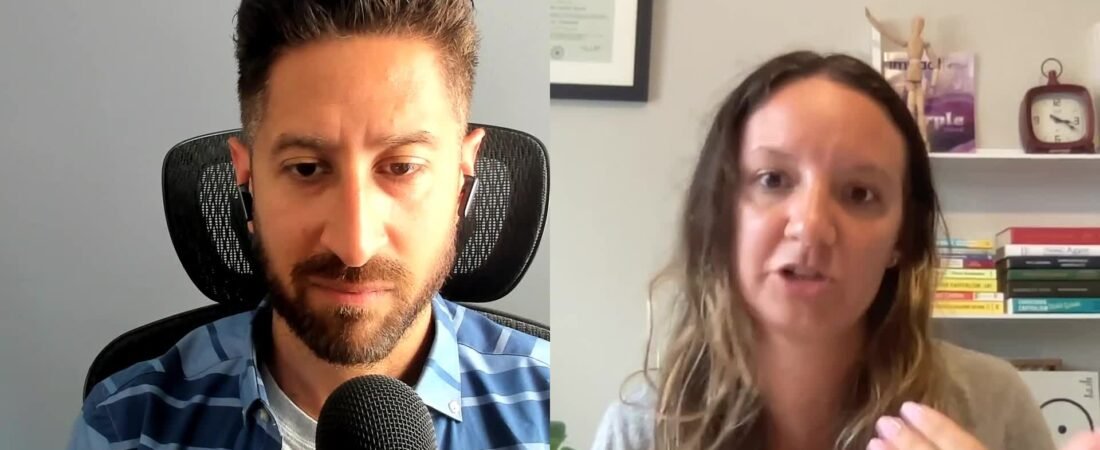
On this episode of the Unscripted Small Business Podcast, host Daniel Hill talks with Stephanie Telibasa, owner of House of Physical Therapy in New York City. She also runs The Planning PT, a coaching business for physical therapists who want to open their own practice. This conversation stays on the business side: how she started, how she decided to grow, and what she learned the hard way about offers and websites.
Ten years in the industry before day one
Stephanie’s first job was almost at a bagel store. Her own physical therapist talked her out of it, because “you don’t want to get up at 5 a.m.” She started working in his small family practice as a freshman in high school, answering phones and helping with networking, so she had about ten years in the industry before she finished her doctorate.
Out of school, she picked the hardest setting she could think of: an out-of-network, cash-based multidisciplinary clinic in Manhattan’s Flatiron district, where she had to build her own caseload. Two years of that made her “really, really motivated to go out on my own.”
A five-year lease and a 500-square-foot storefront
In 2017 she jumped. As she put it, she “took the leap, signed a five-year lease without knowing anything about a build-out and how expensive contractors and things like that are in New York City.” The first House of PT opened in December 2017 in a small storefront with two treatment tables and no fancy equipment.
The name came from her early days treating friends at her apartment, when they’d barter a six pack or a bottle of wine for her time.
“I want it to feel like you’re in my house, my home.”
That brand still drives the model. The practice is deliberately small and one-on-one. Stephanie contrasted the 20 to 30 visits a day therapists often feel pressured into with her own setting, “where we see seven max.” If you run a service business, that’s a pricing and positioning decision as much as a clinical one: fewer clients, more time with each, and a brand built around how it feels to walk in.
Second location, or share the blueprint?
By 2019 the practice had a team, and Stephanie didn’t have to be there 60 hours a week anymore. That freed time came with a choice. She wanted more people to have access to the one-on-one model, so she could either “hustle again and open a second location right away,” or she could start handing other therapists the template: “Hey, here’s how I built a website. Here’s how I marketed it.”
She chose the second, and The Planning PT was born. She coaches therapists in the idea phase on everything from the website to intake forms to picking software. She also works with owners who built a full caseload and are now stuck working 50 hours a week because nothing is written down.
“The fun of being your own boss is no one can tell me what to do, including myself.”
Her fix for that chaos is standard operating procedures, so the next hire isn’t “just running around trying to figure out, copy what you’re doing.” Gil Vaisman made the same case from the owner’s chair in wanting to be useless in his own business.
The $42 ebook that sold one copy
When Daniel asked how she marketed the coaching business, Stephanie told on herself. She took courses on social media and offer design, then launched.
“My first offer was how to open a physical therapy practice, a $42 ebook and one person bought it.”
She called it a terrible fail, and her reasoning is worth stealing. “Anyone can Google it. You can use ChatGPT right now.” What a search or a chatbot won’t do is look at your specific situation, tell you to change your name so your SEO pops up better, or review your website with you and say “that button is in the wrong place.”
The one buyer got three pages in and started emailing questions, so Stephanie got on a call with her. Then more calls. Then she hired a business coach to help her turn what she knew into something people could follow and implement. Today the program has modules, recorded videos, worksheets and calls that get customized to each practice.
“A book is nice, but it’s not custom.”
The $10,000 website quote
Stephanie built the first House of PT website herself in 2017, out of sheer disbelief at a $10,000 quote. “That is more than the electrician who’s putting the chandeliers in the office.” She watched YouTube tutorials, hit pause, made the move and kept going, even though she’s “not a tech person.”
What she learned was how to ship a minimum viable product. “All I needed out of the website was a place for people to send their contact information.” People found her on Google, landed on the site, filled out an inquiry form, and she called them to book.
Daniel loved it, and added that “you should be borderline embarrassed to release whatever that version one is.” Rachel Minion makes the same argument in just get it live.
People pay for your skills
Stephanie’s bottom line applies to almost any small service business:
“It didn’t matter that I didn’t have the most professional website. It mattered that people could find me.”
Clients are coming to you for your service and your skills, she said, “and all of the fancy bells and whistles are not what they’re paying for.”
Looking ahead, Stephanie said “we doubled in size last year and took on a lot of new projects,” so she called this one “the year of efficiency.” The goal is to enjoy the success “and not think about what’s next yet.”
Before you build the polished version, ship the version that does one job. For Stephanie’s first website, that job was collecting a name and a phone number. For her first coaching offer, the one buyer’s questions showed her what the real product was. Find your one buyer, get on a call, and let their questions write version two.
Connect with Stephanie
- House of Physical Therapy: houseofphysicaltherapy.com
- The Planning PT, for physical therapists: theplanningpt.com
- Instagram: @houseofphysicaltherapy and @theplanningpt
This is a conversation about running a small business. Nothing in it is medical advice. Recorded June 2025.
🎧 Listen: Castos | 📺 Watch: full episode video
Keep going → Browse the interviews