🎧 Listen: Castos | 📺 Watch: full episode video
🎧 Listen to this episode
📺 Watch the interview
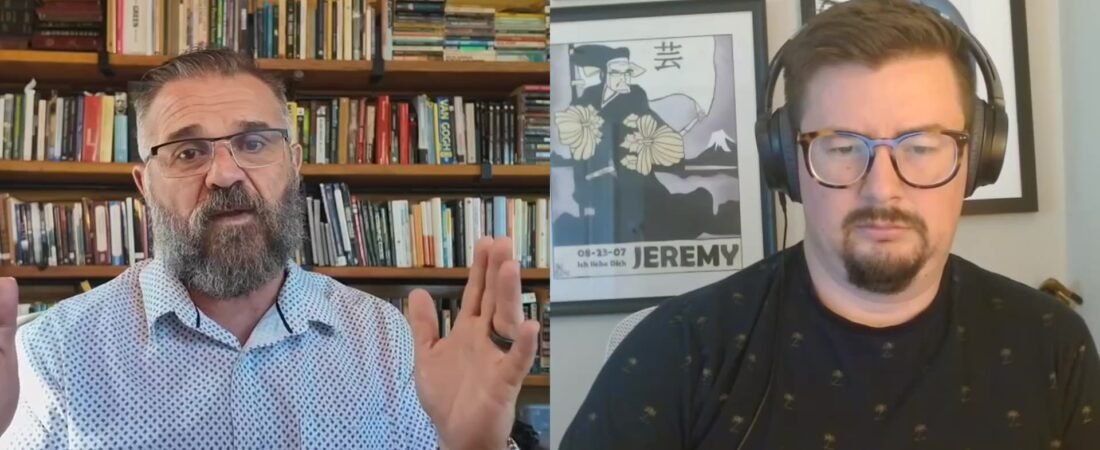
On this episode of the Unscripted Small Business Podcast, host Jeremy Rivera talks with Dr. John A. King, an author, poet and speaker who runs the Phoenix Collective. John is an Indigenous Australian who spent years as a highly visible international speaker, running a consulting and leadership training business that kept him on the road nine months of the year. Then, at 45, it all came apart. This conversation is about what he rebuilt, and what any business owner can take from it.
A comeback is a series of decisions, not one
John calls the collapse “Johnageddon.” A marriage, a church he was running and his consulting business went down together, and he went “from a very highly successful, very visible international speaker to like a dribbling mess in a one room apartment with a cinder block bookcases.” He has spent the last 15 years building what he calls John 2.0.
He has a tattoo of the Finnish word sisu, which he translates as “white knuckled courage in the face of overwhelming odds.” But he pushes back on the idea that a turnaround happens in one dramatic moment.
“And that decision, you know, I say I made a decision and everybody thinks it was a slice in time and one decision and that was it. It was a series of decisions going forward.”
That’s worth holding onto if your business is in a rough patch. You don’t need one heroic call. You need the next decision, and then the one after it.
Don’t hide behind “I just started a business”
Jeremy pointed out that John 1.0 already had a business, and it didn’t save him. John agreed, and named a pattern he sees in the people he works with:
“And often I find when I’ve worked with people that they’re actually hiding and making excuses for poor behavior under the guise of stress because they’ve started a new business.”
Absentee parenting, an absent spouse, missed relationships, all excused by the launch. John’s answer is to be clear about what the business is for. “For me, the purpose of being an entrepreneur is to give myself freedom to be present in those things that are really my priority.” He’s a writer, a poet and a speaker, and “my provision for my vision comes through my entrepreneurial activities.” If the business wins and the relationships go bankrupt, it isn’t working.
Find peers who stand shoulder to shoulder
Jeremy asked about peer groups. He has long conversations with his friend Michael McDougald of Right Thing Agency that go well past SEO, into running a partnership, selling it and starting over. John’s view is that most owners, and most men in particular, never make room for that.
“Women communicate face to face, men communicate shoulder to shoulder.”
Men talk while they’re doing something together: fishing, the football, a workout. John trains Krav Maga with a friend and says he lifts better and enjoys it more on the days his training partner shows up. Jeremy found the same thing in karate after years of hating the solo gym. If you run a small business, the practical takeaway is simple: put a recurring activity with a peer on the calendar, and let the conversation happen beside it.
The three-by-five rule
John’s daily habit is the one he says anybody can do:
“What are three things a day that you can do for five minutes each that will set you up for a win? Small wins. It’s only 15 minutes.”
His own three are breath work, mindfulness and what he calls an integrity check. He sits with a coffee and a cigar, prays, and asks himself whether he’s being authentic and whether he’s walking into any appointment “where I’ve got a different agenda than just turning up as me.” When Jeremy asked for one standard operating procedure to close the show, John came back to the same rule, and stressed that the three items matter less than the commitment: “I’m going to walk the dog, go around the block, read a book, whatever it is.”
Live from the inside out
John and Jeremy both run marketing businesses, and John had a blunt line about the channel they both work in: “Social media is one inch thick and five miles wide.” The people who stand out, he said, are the ones who are authentic in their feeds, not the ones performing for an audience.
He frames it as two ways to live. Outside in, other people tell you “what to do, what to dress, where to go, what to believe, how to act.” Inside out, you make those decisions yourself, and that takes work. Then the line that gives this episode its title:
“Motivation fades under any conflict or load. Purpose literally sets the thermostat for your behavior.”
Jeremy connected it to the service businesses he’s worked with, from marketers to gutter and roofing companies. The ones that win have a reason beyond survival, and they follow through: they call the leads back and send the quote on time. Matt Tyner made the same point about the promise your marketing makes and operations has to keep.
What did you do when time disappeared?
So how do you find a purpose if you don’t have one? John uses an exercise from his courses: “what did you do as a child when time disappeared?” For him it was writing, which became “I’m a writer and I enjoy taking complex things and making them accessible.”
He also warned against measuring yourself against someone else’s path. His brother-in-law loves welding and small engines and would be miserable doing anything else. “When we get into comparison is when we start to question who we are.” If you liked Ameera Virani on designing your life on purpose, this is the same idea from a very different road.
Sit with it
The last stretch of the conversation is about how you look back at past failures without living in them. John’s answer draws on his culture: you sit on the ground with a situation and you don’t race away from it. Jeremy compared it to staring into a campfire, being still without being absent, and mentioned his earlier conversation with therapist Kinsey Morgan.
John brought it back to the owner’s desk. “Entrepreneurs have fear of failure.” There’s the fear of the bankroll, and the fear that “they spend all the money on a holiday with the kids and it’s tax season.” His advice is to notice the fear, stop, and “come up with a plan going forward that’s going to make our tomorrow different than our today.”
What are your three things? Which five minutes would you protect even on a bad week? And if the business disappeared tomorrow, what would you say it was for?
This conversation is about running a small business and building a performance mindset. It is not medical or mental health advice. Recorded September 10, 2025.