🎧 Listen: Castos | 📺 Watch: full episode video
🎧 Listen to this episode
📺 Watch the interview
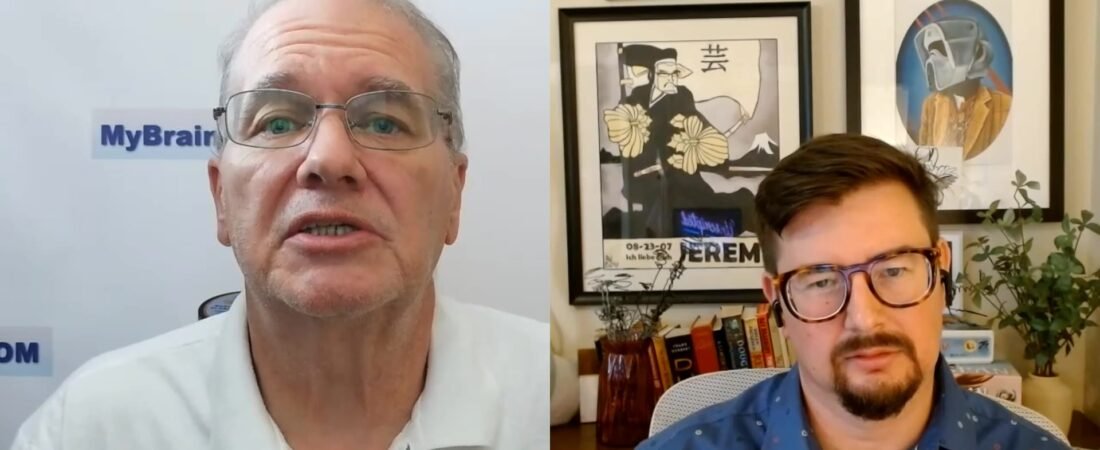
On this episode of the Unscripted Small Business Podcast, host Jeremy Rivera talks with Mark Burnett, the founder of MyBrainRestore. Mark is 67, spent his career as a database programmer for large companies, and did contract database work for the US Patent and Trademark Office. Then he started a single-ingredient supplement company from a powder in an unlabeled jar. This conversation stays on the business side of that story: how you make a physical product, sell it, protect it and keep control of it.
Inventing the process before you can sell the product
Mark’s product starts as a plant seed that was hard to source. He found a supplier, then had it milled in the US. The problem was heat. Standard cold milling “can still get up to like a hundred and twenty degrees,” he said, and his grinder runs at 28,000 revolutions per minute. So he built his own process to keep the powder around fifty degrees.
“So w I had to invent a whole process to do all that.”
That’s the part most product founders underestimate. You aren’t just choosing a supplier. You’re figuring out the equipment, the particle size, how customers will actually take it (Mark’s has to mix into cold food like yogurt or pudding), and what can be automated later.
Plan for 10,000 orders before you have 100
Mark thought about scale early. “If I get 10,000 orders, and now we’re on Amazon, by the way… what happens when you start getting all those orders? How do you ramp up?” Labels, marketing, hiring and fulfillment all had to be thought through before the volume showed up.
He credits his programming career for that habit. A database programmer stares at a blank screen and a blinking cursor and has to get from point A to point B without a map, and “I’m probably gonna blow the machine up a few times, but you know, that’s what you do.”
Some of the ramp was humbling. Mark knew how to hire programmers. Social media help was a different hire: “Keep in mind I’m sixty seven, so you know, the the last games I played were arcade ones.”
Regulators, customs and selling overseas
Jeremy asked about the learning curve of a regulated industry. Mark’s experience was that the domestic side was less of a hurdle than shipping abroad. Supplements don’t go through the approval process drugs do, and he said the FDA told him it gets involved when there’s a complaint or a problem. International orders were harder:
“So you might send it to one country and they get it, and another country the customs just throws it away. The customer never sees it.”
Germany, he said, is especially strict on supplements. So for now the business sells in the US only. If you’re planning to sell a consumable product internationally, check each country’s customs rules before you take the order, not after the package disappears.
Protecting the brand: Amazon, patents and trademarks
When Mark applied to sell on Amazon, he learned about brand protection the way a lot of sellers do, by surprise. “And they wrote me a letter basically saying, We’re protecting your brand.” If anyone else lists a product under his brand name, it gets knocked off automatically.
His USPTO background helped with the rest. “So I knew how to file patents and trademarks. So I did.” He filed on his techniques and his product names, and he says he hasn’t had to send a cease and desist yet because nobody has figured out how to copy the process. For a deeper look at intellectual property for small businesses, see Richard Gearhart’s episode on patents and AI.
Mark’s other moat is being first. “Once you have the market and you’re first to market and you’ve got a brand for yourself, it’s gonna be really, really hard for someone to bust into your level.”
One product, two audiences
MyBrainRestore sells the same product under a second brand aimed at gamers, with different packaging and a different serving size. That audience also became a sales channel: a lot of those buyers wanted to become affiliates, so the company runs an affiliate program. It’s a useful reminder that one product can carry more than one positioning if the audiences are genuinely different.
The business plan you rewrite a hundred times
Jeremy passed along a question from the Kalinka Group, a financial planning firm: what was the biggest challenge in mapping out the business plan? Mark didn’t hesitate. “Writing it a hundred times because it’s never right, you know?” Every new channel, Amazon included, meant a rewrite and a fresh comparison against products that “sell for a half a million dollars every 30 days.”
One decision didn’t change. Real people answer the phone.
“We answer the phone seven days a week. Either I answer it or one of my people answer it.”
A lot of his customers are older and don’t want to talk to AI, and he says they appreciate it. That’s a choice you can copy in any business where the customer is older, anxious, or buying something new to them.
Investors, control and the brother who needed a job
Mark has raised money before, for a database company that was offered $34 million right before the dot-com bubble burst. That experience made him careful. “You have to be very careful with who you get in bed with,” he said, because “sometimes he who has the gold makes the rules.” Investors might push you to cheapen the product or “put the filler in,” and he won’t.
His best cautionary tale: a backer who wanted Mark to hire his brother as the company accountant, because the brother couldn’t get a job anywhere else. Mark passed. Jeremy shared the other side of the coin from his own career at a fully bootstrapped SaaS company that watched a funded competitor get squeezed for revenue, lose developers and see its product suffer.
Jeremy also asked whether Mark had written his standards into the company documents, a question that came out of his interview with exit planning consultant Brandon Moon. Mark’s answer is control. Everyone wants 51% of his Delaware corporation, and he isn’t giving it up, because it’s hard to carve your standards in stone once someone else holds the majority.
“I would call that a wrong direction to go in. Okay. I I wanted to stay a Ferrari.”
So what would you give up for a check? A seat on the board? The supplier you trust? The phone line your customers call? Decide that before the money shows up. If you’re building a physical product yourself, Melissa Denning’s story of inventing a product from zero is a good next listen.
This conversation is about building and running a small business. It is not medical, health or investment advice, and Unscripted makes no claims about any product. Recorded May 27, 2026.